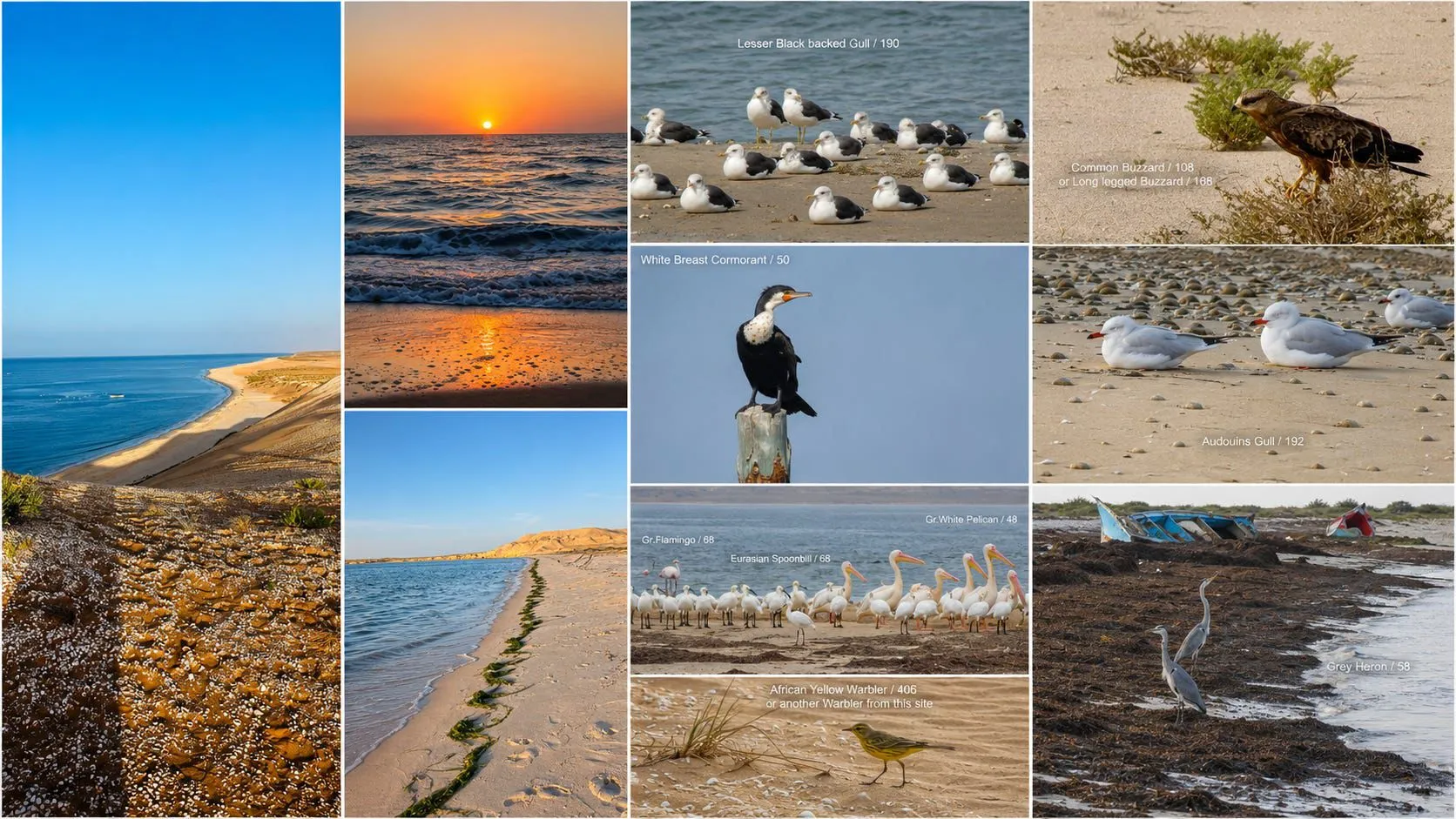
Banc d’Arguin National Park: Where the Sahara Meets the Atlantic Ocean
Banc d’Arguin National Park: Where the Sahara Meets the Atlantic Ocean
Discovering One of Africa’s Greatest Natural Wonders
Along the Atlantic coast of Mauritania lies one of the most extraordinary protected ecosystems on Earth: Banc d’Arguin National Park. Stretching between Nouakchott and Nouadhibou, this immense coastal reserve represents one of the rarest geographical encounters in the world — the meeting point between the vast Sahara Desert and the rich waters of the Atlantic Ocean.
Covering approximately 12,000 square kilometers, Banc d’Arguin is not only Mauritania’s most important national park but also one of the world’s most significant coastal ecosystems. The park contains:
- Shallow lagoons
- Vast mudflats
- Offshore islands
- Seagrass beds
- Tidal creeks
- Sand dunes
- Coastal marshes
- Marine ecosystems
Established in 1976, designated a Ramsar Wetland Site in 1982, and inscribed as a UNESCO World Heritage Site in 1989, Banc d’Arguin is internationally recognized for its immense ecological value, extraordinary birdlife, marine biodiversity, and unique traditional fishing culture.
Today, the park stands as one of the last great untouched natural environments in West Africa — a place where migratory birds, dolphins, desert landscapes, and traditional communities coexist in remarkable harmony.
Geography and Geological Formation
The geography of Banc d’Arguin is deeply connected to the ancient environmental history of the Sahara. Thousands of years ago, during wetter climatic periods known as the African Humid Period, much of the Sahara was crossed by rivers and covered by lakes and grasslands. One of the largest of these rivers was the prehistoric Tamanrasset River, which once flowed westward across the Sahara into the Atlantic Ocean.
The remains of this ancient river system helped form the shallow coastal platform that today defines Banc d’Arguin. Over time:
- Ocean currents
- Tidal activity
- Wind-blown Saharan sediments
- Marine deposits
combined to create one of the richest marine ecosystems in Africa. The park’s waters are generally shallow — often less than five meters deep — allowing sunlight to penetrate the seabed and support extensive seagrass ecosystems that function as nurseries for fish and marine species.
Important islands within the park include:
- Tidra Island
- Nair Island
- Niroumi Island
- Kijji Island
- Arguin Island
These islands provide vital nesting and breeding grounds for birds and marine wildlife. The contrast between the golden Sahara dunes and the turquoise Atlantic waters creates landscapes of exceptional beauty rarely found anywhere else on Earth.
Climate and Environmental Conditions
Although located within the Sahara region, Banc d’Arguin experiences a unique desert-coastal climate influenced by:
- Atlantic trade winds
- The Canary Current
- Ocean humidity
- Coastal fog systems
Average climate conditions include:
- Annual rainfall: approximately 30–40 mm
- Rainy season: July to September
- Summer temperatures:
- Nouadhibou: around 28°C
- Nouakchott: around 32°C
- Winter temperatures: Between 16°C and 19°C
The ocean moderates the extreme heat typical of inland Saharan environments, creating relatively stable coastal conditions that support biodiversity and migratory wildlife.
One of the World’s Greatest Bird Sanctuaries
Banc d’Arguin is globally famous as one of the most important migratory bird sanctuaries on Earth. Every year, more than 2 million migratory birds arrive from:
- Northern Europe
- Greenland
- Siberia
- Arctic regions
along the East Atlantic Flyway, one of the world’s major bird migration corridors. Scientists have recorded:
- More than 108 bird species
- Between 25,000 and 40,000 breeding pairs
- The largest concentration of waterbirds in West Africa
Among the most iconic species found in the park are:
- Greater flamingos
- White pelicans
- Caspian terns
- Common terns
- Eurasian spoonbills
- Grey herons
- Ringed plovers
- Red knots
- Curlew sandpipers
- Dunlins
- Bar-tailed godwits
Some bird populations are astonishing: nearly 1 million dunlins, approximately 500,000 bar-tailed godwits, more than 366,000 red knots, and up to 96,000 flamingos. These concentrations make Banc d’Arguin one of the greatest bird gathering sites on the planet.
Marine Ecosystems and Biodiversity
The ecological richness of Banc d’Arguin extends far beyond birdlife. Ocean upwelling currents near the Mauritanian coast bring nutrient-rich cold waters from the deep Atlantic to the surface. Combined with sediments carried from the Sahara, these nutrients create exceptionally productive marine ecosystems.
The park contains:
- Around 45 fish species
- Extensive seagrass ecosystems
- Shellfish habitats
- Shark and ray nursery grounds
Marine mammals observed in the park include Atlantic humpback dolphins, bottlenose dolphins, common dolphins, Risso’s dolphins, killer whales (orca), pilot whales, harbour porpoises, and Mediterranean monk seals. Several endangered sea turtles also inhabit the area, including green turtles, loggerhead turtles, hawksbill turtles, and leatherback turtles.
The Imraguen: Guardians of Traditional Fishing Culture
One of the most remarkable dimensions of Banc d’Arguin is the presence of the Imraguen, an indigenous fishing community that has lived along the Mauritanian coast for centuries. Approximately 500 Imraguen people live in several villages scattered throughout the park.
Traditionally, the Imraguen practiced artisanal fishing using sailboats, hand-crafted wooden boats, and traditional fishing techniques. Motorized fishing was historically restricted inside the park to protect both marine biodiversity and traditional culture.
The Imraguen represent one of the last surviving traditional fishing cultures on the Atlantic coast of Africa. Their lifestyle reflects a deep relationship between humans and marine ecosystems developed over generations.
Historical Importance and Colonial Legacy
Long before becoming a national park, Banc d’Arguin occupied an important position in the history of trade and exploration along the West African coast. In 1455, the Portuguese established a trading fort on Arguin Island, making it one of the earliest European settlements in sub-Saharan Africa.
Initially attracted by trans-Saharan gold trade routes linked to cities such as Ouadane and Chinguetti, European powers later expanded into fishing, gum Arabic trade, maritime commerce, and the transatlantic slave trade.
The region is also associated with one of the most famous maritime disasters in history. In 1816, the French frigate La Méduse ran aground near the Banc d’Arguin sandbanks. The tragedy inspired Théodore Géricault’s renowned painting: The Raft of the Medusa, which remains displayed in the Louvre Museum in Paris.
Environmental Threats and Conservation Challenges
Despite its protected status, Banc d’Arguin faces growing environmental pressures. Major threats include:
- Industrial overfishing
- Illegal shark and ray fishing
- Offshore oil exploration
- Maritime pollution
- Climate change
- Sea-level rise
Climate change presents a particularly serious challenge. Rising sea levels threaten mudflats, nesting islands, and breeding habitats essential for the migratory life that sustains the park’s global importance.
Tourism and Visitor Experience
Banc d’Arguin remains one of Africa’s most authentic eco-tourism destinations. Unlike heavily commercialized wildlife parks, the region retains an extraordinary sense of remoteness and natural purity.
Visitors can experience:
- Birdwatching expeditions
- Boat excursions
- Dolphin observation
- Traditional fishing villages
- Desert-ocean landscapes
- Remote Atlantic beaches
The silence of the desert combined with the rhythm of the Atlantic creates an atmosphere unlike anywhere else in Africa.
Conclusion: Mauritania’s Extraordinary Coastal Wilderness
Banc d’Arguin National Park is far more than a protected area. It is a living intersection of desert and ocean, wildlife and traditional culture, ancient history and modern conservation. Its immense bird colonies, rich marine biodiversity, indigenous fishing communities, and breathtaking landscapes make it one of the most extraordinary natural destinations in Africa.
Explore Banc d’Arguin with Wakaya Tours
Wakaya Tours invites you to discover the wild Atlantic coast of Mauritania through immersive eco-tourism experiences at Banc d’Arguin National Park. Explore bird sanctuaries, traditional Imraguen villages, desert landscapes, and marine ecosystems with expert local guides and carefully curated expeditions designed for travelers seeking authenticity, nature, and adventure.
Written by
Wakaya Tours