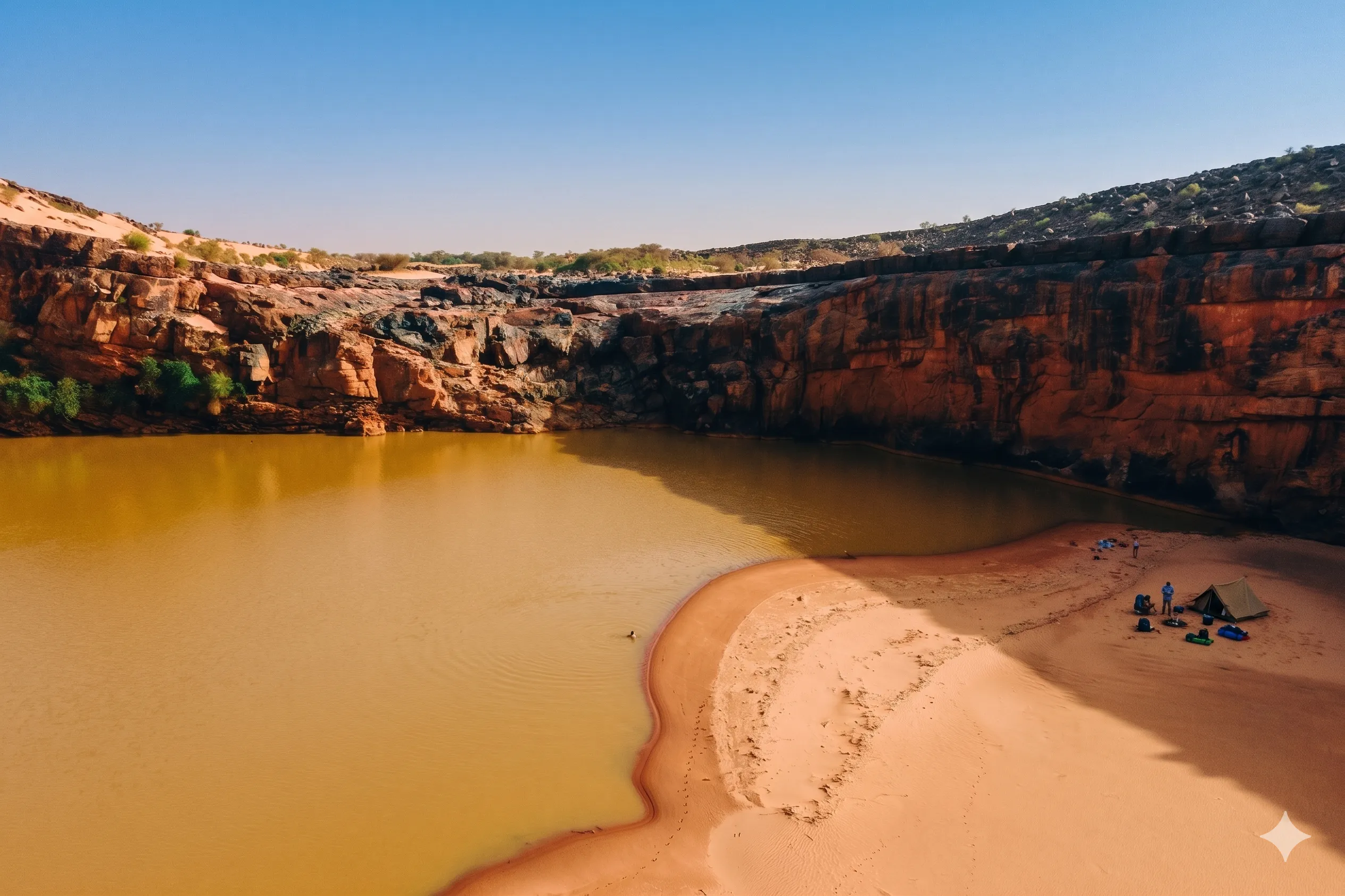
Matmata Lake: Mauritania’s Lost World of the Ancient Green Sahara
Matmata Lake and the Crocodile Pools: Mauritania’s Lost World of the Ancient Green Sahara
Discovering One of the Sahara’s Greatest Hidden Secrets
Deep within the isolated desert landscapes of central Mauritania lies one of the most mysterious and scientifically fascinating places in the Sahara: Matmata Lake and the Crocodile Pools. Hidden among rocky escarpments, fossilized valleys, and remote desert plateaus, Matmata is one of the last surviving witnesses of a forgotten prehistoric world — a time when the Sahara was green, fertile, and filled with rivers, lakes, and wildlife.
Unlike the famous caravan cities of Chinguetti or Ouadane, Matmata remains largely unknown to international tourism despite its extraordinary ecological, geological, and archaeological importance.
Geography: A Forgotten Desert Landscape
Matmata lies deep within the wider Adrar–Tagant desert environment of Mauritania. Reaching the area requires crossing immense desert terrain shaped by millions of years of geological transformation. The surrounding landscape includes vast white sand fields, rocky escarpments, and ancient dry riverbeds (wadis).
The Ancient Green Sahara: When the Desert Was Alive
One of the most fascinating aspects of Matmata is its connection to the prehistoric period known as the Green Sahara (African Humid Period). Between approximately 10,000 and 5,000 years ago, rainfall levels were significantly higher, and grasslands replaced dunes. Animals once inhabiting the Sahara included elephants, giraffes, hippopotamuses, and most famously, crocodiles.
As desertification intensified, these species became trapped in isolated desert water systems. The isolated freshwater pools of Matmata are among the last surviving remnants of this ancient ecological world.
The Crocodile Pools: A Living Relic of Prehistoric Africa
The most extraordinary feature of Matmata is undoubtedly its hidden freshwater pools inhabited by desert crocodiles. Within these isolated pools survive small populations of the West African crocodile (Crocodylus suchus).
These crocodiles are considered relict populations—biological survivors of a time when the region was a lush wetland. They have adapted to survive in these permanent mountain pools (gueltas) and springs, hidden deep within rocky depressions that stay cool even in the extreme Saharan heat.
Scientific and Ecological Importance
The scientific significance of Matmata extends far beyond tourism. Researchers consider the crocodile pools critically important because they provide evidence of ancient Saharan climates and long-term environmental change. These rare ecosystems function as biodiversity refuges and “climate archives” for geologists and biologists studying the transformation of North Africa.
Ancient Stone Structures and Archaeological Mysteries
Scattered across the rocky slopes of Matmata are mysterious circular stone structures. These archaeological remains include dry-stone walls and enclosures that likely date back to the Neolithic period. Because of Mauritania’s extremely dry climate, these ruins have remained preserved for thousands of years, offering valuable evidence of ancient Saharan societies and their adaptation to environmental change.
Nomadic Traditions and Saharan Spirituality
Matmata is also deeply connected to Mauritania’s nomadic heritage. In Saharan oral traditions, isolated desert places such as these hidden water sources are often associated with profound spiritual significance. The silence and isolation of Matmata have inspired generations of Saharan poetry and storytelling.
Tourism and Adventure in Matmata
Although still largely undeveloped, Matmata offers extraordinary opportunities for geological exploration, wildlife observation, and archaeological discovery. For adventurous travelers, the region provides a rare opportunity to experience an authentic Sahara far removed from mass tourism.
Due to its remoteness, visiting Matmata requires 4x4 vehicles, experienced desert guides, and careful logistical planning. Its isolation has helped preserve its ecological integrity and natural beauty.
Conclusion: Mauritania’s Lost World Beneath the Sahara
Matmata Lake and the Crocodile Pools represent one of the Sahara’s most remarkable ecological mysteries. In a landscape now dominated by dunes and stone plains, these isolated pools continue to preserve traces of a forgotten prehistoric Africa. For travelers seeking authenticity and discovery beyond traditional routes, Matmata offers an unforgettable journey into one of the last surviving worlds of ancient Saharan life.
Explore the Hidden Sahara with Wakaya Tours
Wakaya Tours invites you to discover the remote wonders of Mauritania’s Sahara through carefully guided expeditions to Matmata and its legendary crocodile pools. Explore prehistoric landscapes, hidden freshwater systems, and nomadic traditions with expert local guides and authentic desert experiences designed for adventurous travelers and nature enthusiasts alike.
Written by
Wakaya Tours