Mauritanian Weddings: A Journey Through Tradition, Elegance, and Saharan Culture
Mauritanian Weddings: A Journey Through Tradition, Elegance, and Saharan Culture
In the vast golden landscapes of Mauritania, weddings are far more than ceremonies uniting two individuals. They are vibrant expressions of culture, family honor, religion, poetry, hospitality, and centuries-old Saharan traditions. From the elegant flowing melehfa of the bride to the rhythmic sounds of traditional music echoing through desert towns and modern cities alike, Mauritanian weddings reveal the soul of a society deeply attached to its heritage.
Rich in symbolism and social meaning, marriage in Mauritania represents not only love and partnership, but also the strengthening of family ties, tribal alliances, and communal identity. Every stage of the wedding process — from negotiations and engagement to henna nights and lavish celebrations — reflects the country’s unique blend of Islamic values, Moorish customs, and nomadic desert traditions.
Marriage in Mauritanian Society
Marriage occupies a central place in Mauritanian life. It is considered one of the most important milestones in adulthood and is often viewed as both a personal and family responsibility. In many communities, marriage is not simply a private relationship between a man and a woman; it is a union between families, social networks, and sometimes even tribes.
Family approval remains highly important, especially in traditional environments. Parents and elders may participate in selecting or approving a future spouse based on:
- Family reputation
- Social background
- Religious values
- Education and economic stability
Although modern urban life has increased the number of love marriages, family involvement continues to shape many unions across the country.
The Influence of Islam on Marriage
As an Islamic republic, Mauritania’s marriage traditions are deeply influenced by Islamic teachings and legal principles. A traditional Islamic marriage contract, known as the nikah, usually includes:
- The consent of both bride and groom
- Witnesses
- A marriage agreement
- The payment of a dowry (mahr)
The dowry is an important symbol of commitment and respect toward the bride. Depending on the family’s social and economic status, it may include money, jewelry, clothing, livestock, or property.
In some marriages, women negotiate specific conditions within the marriage contract. One famous condition in Mauritania is known as “no prior, no post”, meaning the husband promises he has no wife before the marriage and will not take another wife afterward. This reflects the strong opposition many Mauritanian women have toward polygamy, despite its legality under Islamic law.
Engagement and Wedding Preparations
Mauritanian weddings often involve long periods of preparation filled with excitement and family gatherings. Before the wedding itself, both families may engage in discussions concerning marriage arrangements, dowry expectations, housing, and ceremonial organization.
Wedding preparations can last for days or even weeks. Homes become lively centers of celebration where relatives and friends gather to help with decorating, cooking, beauty preparation, and organizing festivities. Women especially play a major role during this stage, turning wedding preparation into a deeply social and emotional experience.
The Beauty and Elegance of the Mauritanian Bride
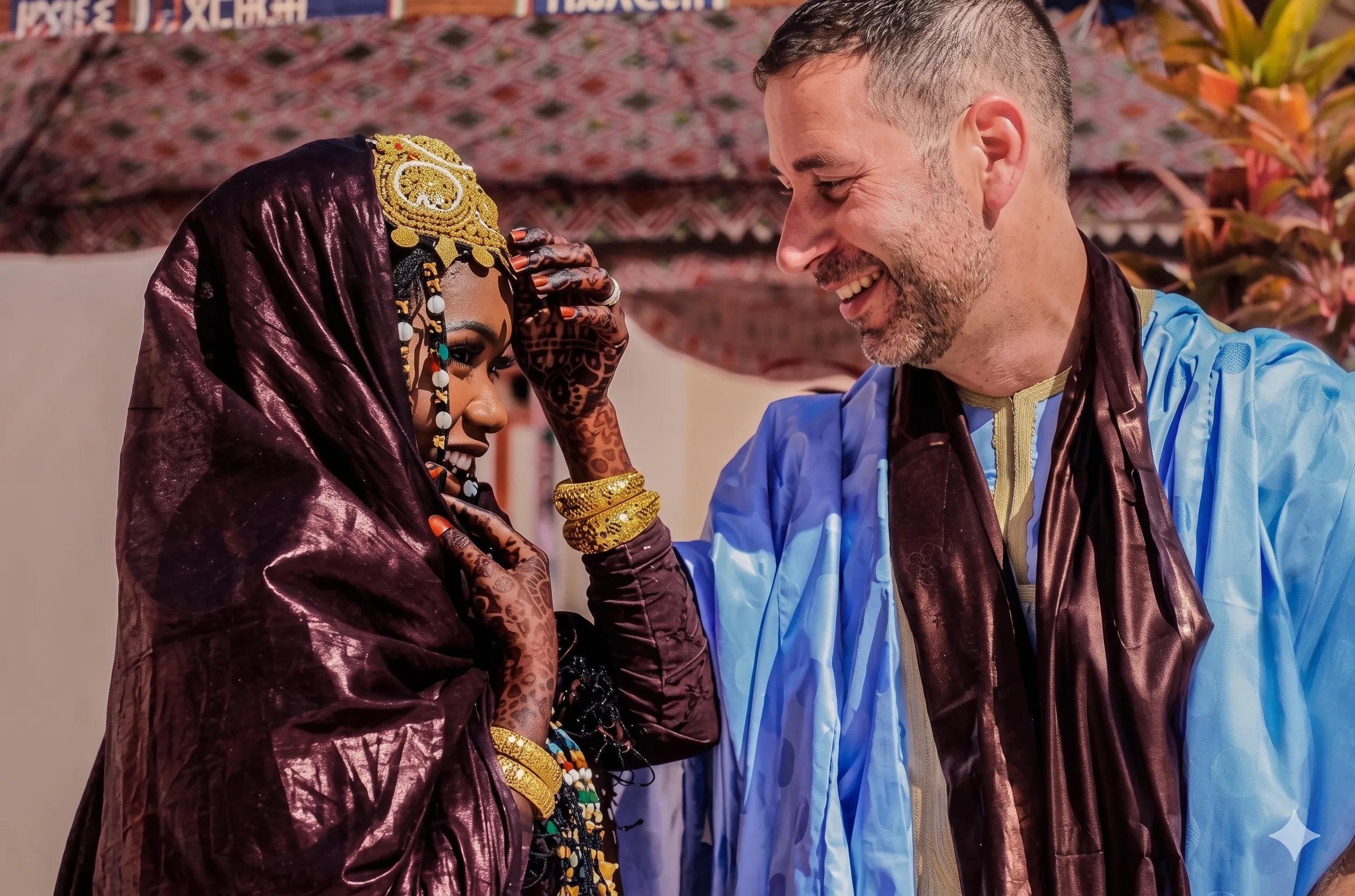
One of the most striking elements of a Mauritanian wedding is the bride’s appearance. Brides traditionally wear the famous Melehfa, a long colorful fabric gracefully wrapped around the body and head. Flowing and elegant, the melehfa represents femininity, beauty, dignity, and cultural identity.
Bridal fashion often includes:
- Luxurious fabrics and bright colors
- Gold jewelry and perfume
- Elaborate hairstyles
- Detailed henna designs
Henna ceremonies are especially important. During these gatherings, women sing, dance, apply henna, and celebrate the bride before the wedding day. Henna symbolizes joy, blessing, beauty, and protection.
The groom traditionally wears the Daraa or Boubou, a flowing Saharan robe often made in blue or white with fine embroidery. The blue daraa has become one of the most recognizable symbols of Mauritanian and Saharan identity.
Music, Poetry, and Celebration
Mauritanian weddings are known for their vibrant atmosphere filled with music and artistic expression. Traditional songs, poetry, and praise performances are often central to the celebration.
In many weddings, women gather separately to:
- Sing traditional songs
- Perform rhythmic dances
- Recite poetry
- Celebrate the bride’s transition into married life
Music reflects Mauritania’s rich cultural diversity and blends Arab, Berber, and West African influences. In some regions, professional praise singers or griots participate in the ceremonies, adding historical and poetic dimensions to the event.
Hospitality and Food at Mauritanian Weddings
Hospitality is a sacred value in Mauritanian culture, and weddings provide an opportunity for families to demonstrate generosity and honor their guests.
Traditional wedding meals may include:
- Rice dishes and roasted meat
- Camel meat in some regions
- Couscous
- Milk, dates, and sweets
Tea ceremonies are an essential part of social interaction. Mauritanian tea, often prepared slowly and served in multiple rounds, symbolizes friendship, hospitality, and togetherness. Guests may spend hours drinking tea while sharing stories, music, and laughter.
Traditional Beauty Standards and Wedding Culture
Historically, beauty standards in some Mauritanian communities associated fuller body size with wealth, fertility, beauty, and family prestige. This contributed to the controversial practice known as Leblouh, or force-feeding girls before marriage to increase their body size.
Today, however, the practice is increasingly criticized due to serious health risks, changing beauty ideals, education, and women’s rights advocacy. Modern Mauritanian society is gradually moving away from these harmful traditions, especially in urban areas.
Modern Changes in Mauritanian Weddings
Like many societies, Mauritania is experiencing rapid social transformation. Urbanization, education, technology, and social media have influenced how young Mauritanians view marriage.
Modern weddings increasingly combine:
- Traditional customs and contemporary fashion
- Luxury venues and photography
- Modern entertainment
At the same time, rising wedding expenses have become a challenge for many families. Young Mauritanians today often seek emotional compatibility, education, and financial stability alongside traditional family expectations.
Conclusion
Weddings in Mauritania are extraordinary cultural experiences where tradition, religion, family, and celebration come together in remarkable harmony. They are moments of joy that strengthen social bonds, preserve ancient customs, and showcase the richness of Mauritanian identity.
Whether celebrated in a bustling city or beneath the endless skies of the Sahara, Mauritanian weddings continue to embody the warmth, elegance, and cultural depth of one of North Africa’s most fascinating societies.
Sources
- New Lines Magazine – Secret Marriages and Serial Divorce in Mauritania
- Generis Online – Marriage and Divorce Regulations in Mauritania
- The New York Times – Divorce Parties in Mauritania
- Times of India – Celebration of Divorced Women in Mauritania
- All Brides – Mauritanian Women and Marriage Traditions
- Bolen Bliss – Weddings in Mauritania
Written by
Wakaya Tours